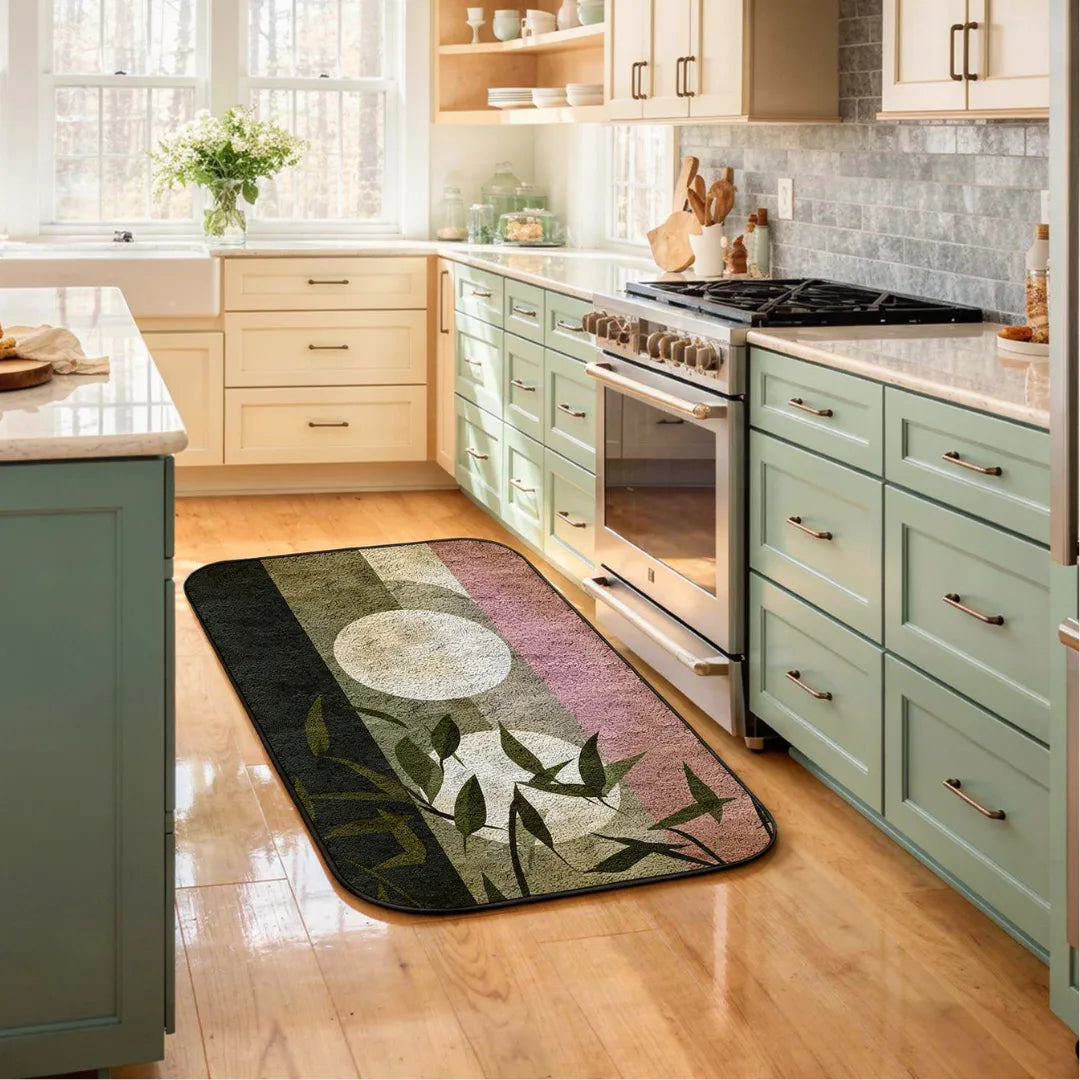

What makes an irregular rug look thoughtfully designed rather than just unusual? The answer is not how many curves it has. It is whether the visible outline, furniture and colors work together. The best arrangements keep enough of the shape in view while leaving useful room to walk.
This guide gives you a simple styling checklist for an irregular rug in a real home. If you need a definition of organic, odd-shaped or freeform rugs, use our shape terminology comparison. For exact dimensions and furniture placement, use the shape, size and placement guide.
1. Let the silhouette be visible
Look at the area from the doorway. If the furniture covers every curve, the rug may appear almost rectangular. Instead, identify one side of the design you want people to notice. Position a round table over a quieter part of the rug, or leave a wavy edge showing along the open side of a chair.
A bedside rug can show its most interesting contour in the walking area beside the bed. In a reading nook, a small asymmetrical rug can frame the chair without extending across the doorway. The intention is to reveal the outer line without forcing your furniture out of place.

2. Balance the rug with the room's visual weight
Solid sofas, dark cabinetry and large coffee tables create strong shapes of their own. A narrow, highly detailed outline can get lost next to them; a broader pebble or gentle wave can read more clearly. Slim-legged chairs and simpler furniture usually leave more space for a smaller, sculptural silhouette.
Before ordering, tape the maximum outside footprint onto your floor. Stand back and check whether the rug will connect the furniture or look stranded in an open gap. A rug that is technically the right length can still feel disconnected if the most visible curve points away from the room's main seating group.
3. Decide whether color or contour is the feature
An irregular edge already introduces movement. For a calm interior, repeat one existing accent color from a pillow, print or upholstered chair. If you want the rug to be the room's focal point, use a bolder palette but give the surrounding furniture a quieter role.
Gentle floral or tonal patterns often pair naturally with a flowing contour. High-contrast graphics can also work; just make sure the shape and the print do not compete with too many other patterns in the same corner.

4. Use asymmetry as a single clear gesture
A sculptural rug does not require an off-center sofa, angled side tables and a dramatic lamp all at once. One expressive outline often looks better when paired with steady, familiar furniture forms. If the room already has a sculptural coffee table, try a less complicated rug edge.
Test two layouts before deciding. In the first, align the rug loosely with the furniture. In the second, rotate it slightly toward the open floor. Photograph each from the same doorway. The stronger composition usually becomes obvious in a quick side-by-side comparison.

5. Check the design from normal standing height
Online product images often show every inch of the rug from above. In a home, you normally see it partly hidden under furniture. Recheck the design from the hallway, the sofa and the point where guests enter. Can you still see a meaningful part of the shape? Is the color balanced with the rest of the room?
Also confirm the practical details: the door should open freely, the rug should not sit in a busy walkway and the material should suit its indoor use. A Print Nest's faux-cashmere rugs should be spot cleaned, not machine washed. Check each product's backing and care information before choosing a placement.

A Five-Point Irregular Rug Styling Checklist
- Visible edge: Can you see the distinctive outline from the usual viewing position?
- Furniture connection: Does the rug look intentionally placed with the sofa, chair or table?
- Walking clearance: Can people walk and open doors without stepping around the rug awkwardly?
- Color balance: Does the rug coordinate with an existing accent, or provide contrast on purpose?
- Actual dimensions: Have you measured the maximum outer length and width, not just estimated from the product image?
When these five points work together, the rug is more likely to feel like part of the room. You can browse ready-designed irregular rugs or explore made-to-order shapes for a specific artwork or outline. Custom orders include a digital design proof after ordering; review the shape before approving production.
Frequently Asked Styling Questions
Does an irregular rug work in a small room?
Yes, when the outline suits the available floor area. A simple contour placed beside a chair or bed may work better than a larger, busier shape.
Should a coffee table be centered on an asymmetrical rug?
Not necessarily. Judge the balance from where the room is normally viewed, rather than trying to make every edge symmetrical.
Are all irregular rugs available in custom sizes?
No. Check the size options on a ready-designed product. For a different outer shape or artwork, choose a custom-shaped product and confirm its available size options.